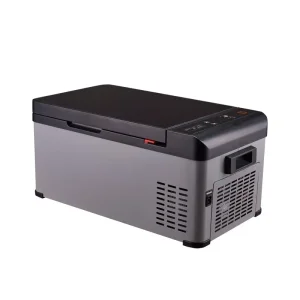
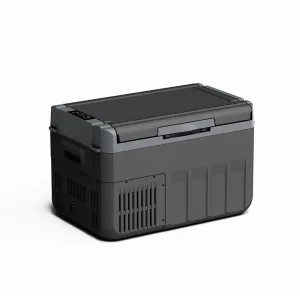
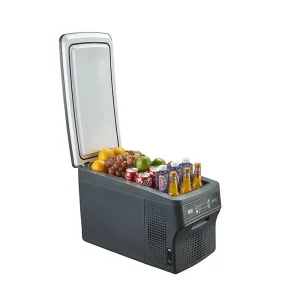
The global portable cooling industry is witnessing an unprecedented paradigm shift. As urbanization trends evolve into a longing for "Van-life," overlanding, and nomadic professional lifestyles, the demand for reliable 12V car coolers has skyrocketed. This is no longer a niche market for hobbyists; it is a critical component of modern mobility.
Industry analysts indicate that the "Outdoor Economy" is expanding at a CAGR of over 8% globally. Key drivers include the proliferation of electric vehicles (EVs), where integrated 12V accessory sockets are standard, and the rapid advancement of portable power stations. Modern consumers demand compressor-based cooling—not thermoelectric—because of the need for precise temperature control, low energy consumption, and high efficiency in extreme climates.
The "Made in China" label has transcended traditional manufacturing to embody "Factory 4.0." Leading suppliers, such as our manufacturing facility in Anhui, have moved beyond labor-intensive assembly to highly automated, data-driven production ecosystems.
Key Pillars of our Supply Chain Resilience:
State-of-the-Art Facility
New Models Annually
Countries Served
Growth Rate
Successful procurement of 12V car coolers requires more than just low pricing. It requires a partner who understands the "Information Gain"—the technical nuances that prevent returns and customer dissatisfaction.
When selecting a supplier, global enterprises must look for:
Compressor fridges act like home refrigerators, capable of freezing (-20°C) regardless of ambient heat. Thermoelectric coolers can only cool down by ~20°C relative to ambient air and cannot freeze items.
Our units utilize universal electronic control units (ECU) that automatically detect 12V or 24V inputs, making them compatible with cars, trucks, marine vessels, and solar off-grid setups.
We provide detailed technical specifications, energy consumption test reports, and stress-test data for vibrations, allowing wholesalers to provide transparent, E-E-A-T compliant marketing materials to their end-consumers.
 Qixuan Electric