7 Mini Cooler Box Buying Tips for Global Buyers

Time:2026-11-11 Author:Oliver
0%

A Mini Cooler Box may look simple on a product page: a compact shell, a lid, and a handle. Yet global buyers must judge insulation, usable capacity, materials, portability, and supplier consistency before placing an order. A few centimeters can change whether the box fits beneath a café counter or inside a vehicle. Small details matter.

Outdoor demand offers useful context, but not a complete forecast. The Outdoor Industry Association’s 2024 Outdoor Participation Trends Report counted 175.8 million U.S. outdoor participants in 2023. That figure signals broad interest in outdoor activities; it does not predict Mini Cooler Box sales in every region. Buyer research still matters.

Durability is a familiar priority in cooler design. YETI co-founder Roy Seiders has described the company’s founding goal as making a cooler “virtually indestructible.” Buyers should treat that as a design ambition, not a performance guarantee. Ask suppliers for test methods, temperature-retention results, material specifications, and sample units. Then check hinges, seals, drainage, and lid fit yourself. A glossy brochure cannot show how a latch feels after repeated use.

There is no perfect checklist. Real-world testing can expose gaps that specifications miss. The following seven buying tips help global buyers compare products more carefully, ask clearer questions, and avoid choosing on appearance alone.
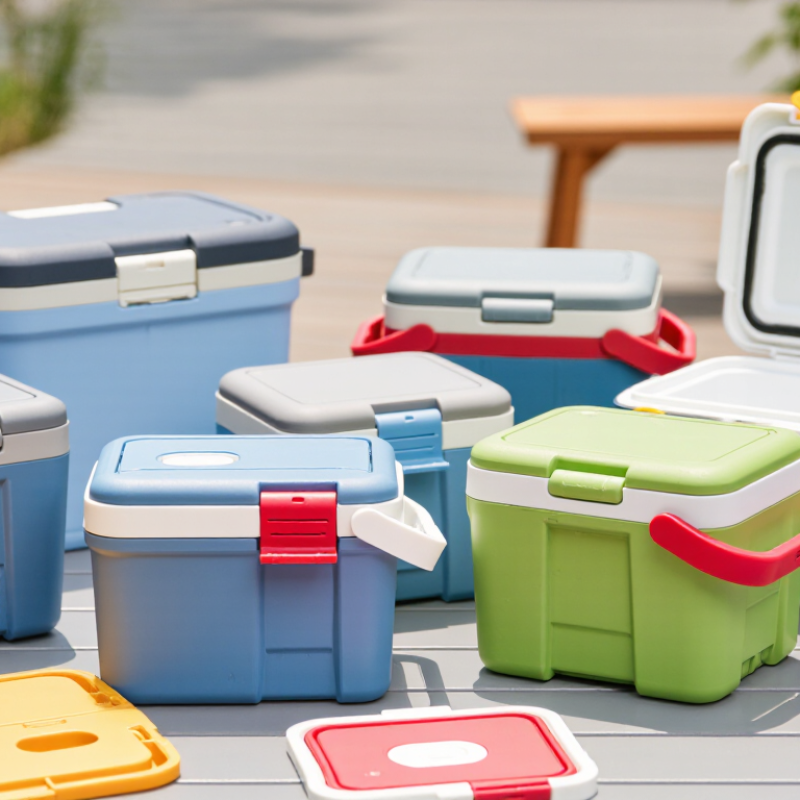
7 Mini Cooler Box Buying Tips for Global Buyers

Understanding Mini Cooler Boxes and Their Common Uses

A mini cooler box is a small insulated container designed to keep food and drinks cool during short trips. Many fit beneath a desk, on a car seat, or inside a picnic bag. They are useful for packed lunches, baby bottles, snacks, and a few cans of water. Small, but handy. Insulation slows warming; it does not create cold. Pre-chill the box and add frozen packs around the contents. Leave room for the lid to close firmly, and keep the box out of direct sun when possible.

Common uses include commuting, day trips, beach outings, and breaks at outdoor work sites. A compact box can hold a sandwich and fruit without taking up much space. For longer outings, check how much the model can carry and whether its interior is easy to wipe clean. In hot weather, a cooler left in a parked car can warm quickly. Ice packs help, but results vary with insulation, opening frequency, and outside temperature. It is easy to expect too much from a very small box; a realistic plan is to pack only what you will use soon.

Choosing a Cooling Type and Power Source

A mini cooler’s cooling method matters more than its exterior size. Thermoelectric models are light and simple, but usually cool only a set amount below surrounding air temperature. On a hot loading dock, that difference may not keep drinks properly chilled. Compressor models can hold a more controlled temperature, though they often cost more and need clear airflow around their vents. Passive boxes use ice packs and no electricity. Simple, but dependable for short trips.

Match the power source to the way the cooler will be used. A 12-volt socket suits many vehicle trips; an AC adapter is useful in offices or hotel rooms. Some units accept both, which helps when routes change. Check the input voltage, plug type, and stated power draw before ordering across borders. For battery operation, compare the cooler’s wattage with the battery’s usable capacity, not just its advertised size. That detail is easy to miss. Also ask how long cooling lasts after power is disconnected. A claimed temperature range may come from controlled testing, not a sunlit cab. That is worth questioning. Keep ventilation space in your plan, even if it makes the storage area slightly less neat.

7 Mini Cooler Box Buying Tips for Global Buyers: Choosing a Cooling Type and Power Source

Compare common power-source options across mini cooler types. A value of 1 indicates that the power source is commonly offered for that type; actual compatibility varies by model.

Buying tip: Check the product specifications for supported voltage and included adapters. Absorption models may also use LPG, while electric-only models need a compatible electrical supply.

Comparing Capacity, Insulation, and Portability

A mini cooler box should match the trip, not just the product photo. Capacity labels can be misleading because ice packs and shaped containers take up room. Compare the usable interior dimensions with the bottles, lunch containers, or medicine you expect to carry. A box that holds four upright cans may not fit a wide food container. Measure before buying.

Tips: Place a reusable bottle and one ice pack inside a similar-sized box at home. This simple check reveals awkward gaps and crowded corners. Leave room for cold air to circulate; packing every space tightly can reduce cooling performance.

Insulation thickness and lid fit both affect how long contents stay cool. For a short commute, lighter insulation may be enough. Longer outdoor use calls for thicker walls and a secure seal, though no small cooler stays cold indefinitely in direct sun. Portability matters too: check the empty weight, handle grip, and whether the box fits beneath a seat or in a packed car. Wheels rarely help much on a compact model. A shoulder strap can, but it may dig in when the cooler is full. Compare features against your real route, and remember that capacity estimates are only estimates.

7 Mini Cooler Box Buying Tips for Global Buyers - Comparing Capacity, Insulation, and Portability

Buying tip What to compare Practical guidance Buyer check
1. Match capacity to the trip Usable volume in litres and the space needed for food, drinks, and ice packs Small personal coolers are often around 5–10 L; compact group models commonly offer roughly 10–20 L. Actual usable space is less than the outside dimensions suggest. Ask for internal dimensions and confirm whether stated capacity includes space occupied by the lid or fittings.
2. Compare insulation construction Insulation material, wall thickness, lid fit, and seal design Insulation performance depends on the complete design, not material name alone. A well-fitting lid and continuous seal help reduce warm-air exchange. Request a cross-section or specification for the walls and lid, and check that the closed lid sits evenly.
3. Treat ice-retention claims carefully Test duration, ambient temperature, starting contents, ice amount, and opening frequency There is no single retention time that applies to every trip. Sun exposure, how often the box is opened, and pre-chilling can all change results. Compare test results only when the test conditions are disclosed and similar to your intended use.
4. Check loaded weight and carrying comfort Empty weight, filled weight, handle width, grip, and strap attachment points Water weighs about 1 kg per litre, so contents can add substantial weight even in a small cooler. A comfortable handle matters more as the load increases. Compare empty weight and handle details; estimate the full load before choosing a hand-carried model.
5. Measure portability and storage External dimensions, shape, stackability, and storage footprint A compact footprint can fit more easily in a vehicle, but thick insulated walls reduce internal space. Soft-sided designs may fold down; rigid boxes generally retain their shape. Check the external dimensions against your vehicle, luggage area, or storage shelf—not just the listed litre capacity.
6. Inspect drainage and cleanability Drain plug, interior corners, removable parts, and surface finish A drain can make melted ice easier to remove from larger models. Smooth interiors and accessible corners are generally easier to wipe clean. Confirm that the drain is secure and accessible, if fitted, and review the manufacturer’s cleaning instructions.
7. Verify export and compliance details Materials, food-contact documentation where applicable, packaging, and destination-market requirements Requirements vary by market and product claims. Documentation should match the actual materials and intended use of the cooler. Request relevant material and test documents, and verify applicable import rules with the destination-market authority.

Note: Capacity ranges are general buying guides, not universal product classifications. Cooling performance varies by design and test conditions.

Checking Materials, Safety Standards, and Durability

A mini cooler’s shell should resist knocks without becoming brittle in cold weather. Compare food-contact documentation for the specific material, not just labels such as “BPA-free.” Ask for test reports covering the finished interior, seams, and lid, since additives and manufacturing can affect results. A glossy shell can still crack. For durability, ASTM D5276 describes free-fall drop testing for packaged products; ask suppliers whether their cooler test plan reflects realistic drops and loaded weight. Results vary with test conditions, so request the height, surface, and sample count.

Tip: Check wall thickness, hinge pins, latch strength, and gasket fit by hand. Press the lid corners; uneven gaps can leak cold air. Request repeated open-close and leak tests, plus photos of damaged samples. A thick wall is not proof of good insulation.

For food storage, the U.S. FDA Food Code sets cold holding at 41°F (5°C) or below. Treat that as a practical benchmark, not a promise that every cooler can maintain it. Ask for temperature-retention data under stated ambient conditions, using ice load, opening frequency, and test duration. A short test in a cool warehouse proves little. Review material declarations and independent laboratory reports, ideally from an ISO/IEC 17025-accredited lab. These details take time to check, and sometimes supplier paperwork is incomplete; note the gap before ordering.

Evaluating Suppliers, Costs, Shipping, and After-Sales Support

A reliable mini cooler box supplier should explain construction, not just quote capacity. Ask for wall thickness, insulation type, hinge material, and latch design. Check the usable interior dimensions with a ruler; exterior measurements can be misleading. Request a production sample and test it with the intended load in a warm room. Record how long it stays cool, since results depend on ambient temperature, contents, and opening frequency. One sample is not a guarantee.

Compare the full landed cost. Include unit price, setup fees, packaging, minimum order quantity, and freight. Confirm which charges are estimates and which are fixed. Small boxes can still ship inefficiently if cartons leave unused space. Ask for carton dimensions and gross weight, then compare shipping options using the same delivery terms. Delays happen. Build a buffer into seasonal orders, and check whether cartons can withstand stacking and ordinary handling.

After-sales support deserves the same scrutiny as price. Get written terms for defects, reporting deadlines, replacement parts, and response times. Ask whether lids, handles, or latches are available separately. Keep sample photos and inspection records for comparison with delivered goods. A supplier’s quick reply is useful, but the remedy matters more. I have seen buyers focus on a low quote and overlook unclear fault procedures; that is an easy mistake to repeat.

FAQS

Which cooling type works best in a hot vehicle?

Compressor models hold temperatures more steadily. Thermoelectric units cool only below surrounding air temperature, which may not be enough in a hot cab.

Are passive coolers useful for short trips?

Yes. Ice packs need no electricity and can work well for brief outings. Cooling will not last indefinitely.

What power details should I check before buying?

Confirm the input voltage, plug type, and power draw. A 12-volt socket suits many vehicle trips; AC power helps in offices or hotel rooms.

Can I run a cooler from a battery?

Compare its wattage with the battery’s usable capacity, not its advertised size. That detail is easy to miss.

How can I check whether the interior is large enough?

Compare usable dimensions with your actual bottles and lunch containers. Try a bottle and ice pack in a similar-sized box at home. Measure first.

What affects how long contents stay cool?

Insulation thickness and a secure lid seal both matter. Direct sun can overwhelm a small cooler. I may still underestimate the heat.

How much space should I leave around a compressor cooler?

Keep airflow vents clear and leave room around them. It may make the storage area less tidy, but blocked vents can hurt performance.

Which portability features are worth checking?

Check empty weight, handle grip, and whether the cooler fits beneath a seat. A shoulder strap can dig in when full; wheels rarely help much on compact models.

Conclusion

This guide helps global buyers make informed decisions when sourcing a Mini Cooler Box. It explains how these compact coolers serve everyday needs such as travel, outdoor activities, and food or beverage storage, then compares cooling types and power options to help buyers choose a model suited to its intended use. Capacity, insulation performance, weight, and portability are also considered, since the right balance depends on how much the cooler must hold and how easily it needs to be moved.

The guide also highlights the importance of checking material quality, product safety standards, and durability before placing an order. Buyers can assess suppliers by reviewing product specifications, sample quality, production capacity, and communication. Finally, comparing total costs—including shipping—and confirming warranty terms and after-sales support can help reduce surprises and support a smoother purchasing process.


Oliver

Oliver

Oliver is a seasoned marketing professional with a wealth of expertise in driving brand awareness and engagement. With a deep understanding of our company's product offerings, he consistently delivers high-quality content that enriches our professional blog. His insights not only shed light on......