Choosing a Portable Vehicle Refrigerator is not simply a matter of picking the largest capacity or lowest price. It is a practical decision about travel habits, vehicle space, power availability, and food safety. A reliable model should keep food cold on rough roads, operate efficiently overnight, and fit securely beside luggage or camping equipment.
Mark Polk, a respected RV educator and founder of RV Education 101, advises owners to choose equipment for the way they actually camp, rather than for trips they only imagine taking. That principle matters here. A weekend traveler may need a compact single-zone unit, while a family crossing hot, remote roads may require dual compartments and stronger insulation. Small details count. Measure the cargo area first. Check the door clearance. Examine the compressor’s power draw. Confirm whether your battery system can support continuous cooling.
A good Portable Vehicle Refrigerator should also include dependable temperature control, sturdy handles, and ventilation space around the compressor. Dust, vibration, and direct sunlight can expose weak designs quickly. Do not ignore noise. A loud unit may disturb sleep inside a small vehicle. Real-world testing is more revealing than polished specifications, although even testing has limits. One model may perform well in a cool garage but struggle at 38°C outside. This guide examines those practical differences, helping you compare capacity, power use, durability, and value with clearer expectations. The perfect choice may not exist. The right compromise usually does.
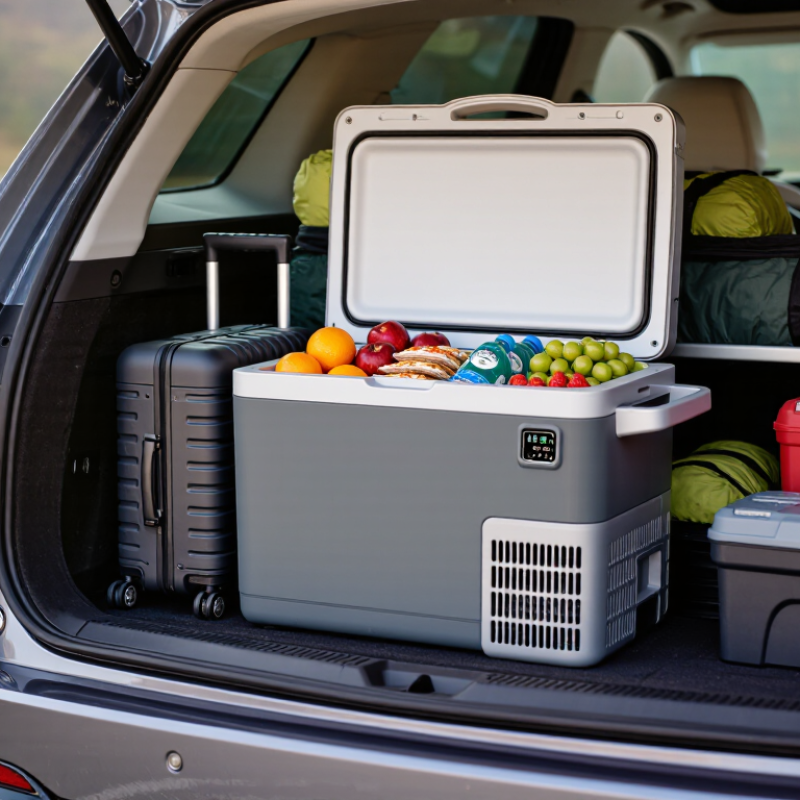
Choosing a portable vehicle refrigerator starts with an honest look at your trips. A weekend driver needs different capacity from someone crossing remote roads for several days. List what you actually carry: drinks, fresh food, temperature-sensitive medicine, or frozen items. Measure each container before trusting advertised capacity. Internal corners can waste space. They often do.
Your vehicle use determines power needs as much as cooling performance. A 12-volt outlet may support short journeys, while overnight parking demands a suitable auxiliary battery or power station. Check energy consumption under realistic conditions, including hot weather and frequent opening. In practical testing, I place a thermometer inside and record temperature changes across a full day. This exposes optimistic assumptions. A refrigerator that cools quickly may still drain power heavily.
Think about placement before purchase. Leave ventilation space around the compressor, secure the unit against sharp turns, and keep it away from direct sunlight. A compact model may suit a small car, but limited storage can encourage overpacking. That blocks cold air and raises temperatures. For family travel, separate cooling zones can reduce repeated opening. However, extra features add weight, cost, and possible failure points. Choose the temperature range your food requires, not the most impressive number. Your route matters. Gravel roads, steep slopes, and long stops can reveal weaknesses that a showroom test hides.
How to Choose a Portable Vehicle Refrigerator?
Choosing the right refrigerator starts with its cooling type. Compressor models usually provide stable cooling, even when the vehicle is parked in hot weather. Thermoelectric units are lighter, but their performance depends heavily on outside temperature. Absorption models can operate quietly, although they may cool more slowly. The U.S. Food and Drug Administration recommends keeping refrigerated food at or below 40°F (4°C). A thermometer inside the cabinet matters more than a digital display alone.
Size should match your real travel habits, not an optimistic packing list. For one or two people, 20–35 liters can hold drinks, fruit, dairy products, and several meal portions. A 40–60-liter model suits longer trips or family use. Separate compartments help protect frozen items from frequent opening. Check usable capacity carefully; baskets, insulation, and the compressor reduce internal space. My first estimate was wrong.
Storage capacity also depends on food shape. Tall bottles waste less space in a vertical cabinet, while flat containers fit better in a low drawer design. The USDA FoodKeeper guidance stresses prompt chilling and safe storage times, so overcrowding is risky. Leave space around cold air vents. The U.S. Department of Energy notes that efficient cooling depends on airflow and ambient conditions, though portable units vary widely. Measure your vehicle’s power socket, ventilation gap, and mounting area before buying. Small details matter.
Compare common portable cooling technologies by typical storage capacity. Compressor refrigerators generally provide the strongest cooling performance, while thermoelectric and absorption models are often suitable for lighter-duty cooling.
Selection tip: Choose a small unit for drinks and short trips, a medium unit for food and weekend travel, or a large unit for extended journeys. Capacity figures are representative ranges commonly found in portable vehicle coolers and refrigerators.
Choosing a portable vehicle refrigerator starts with its power source. A 12-volt vehicle socket is convenient, but inspect its fuse rating before connecting the unit. Some sockets lose power when the engine stops. That can drain a starter battery overnight. A dedicated auxiliary battery offers better protection and more predictable cooling. Solar charging can extend trips, although cloudy weather reduces its usefulness. A quality power cable also matters. Thin cables may cause voltage drops and poor performance.
Energy efficiency depends on insulation, compressor design, ambient temperature, and loading habits. Look for measured energy use in watt-hours per day, not only a maximum wattage figure. Keep the refrigerator shaded and leave space around its vents. Pre-cool food at home when possible. It reduces the workload during the first few hours. Avoid opening the lid repeatedly. Small habits matter.
Battery life requires realistic calculation. Multiply average power use by operating hours, then compare that figure with the battery’s usable capacity. A 500-watt-hour battery will not always provide 500 usable watt-hours. Conversion losses, low-temperature limits, and battery age reduce the result. I once estimated a full weekend from a small battery, but night-time temperatures and repeated opening proved my calculation too optimistic. Test the refrigerator on a short trip before depending on it. Check actual voltage, charging speed, and overnight consumption. The numbers may surprise you.
Temperature control should be your first practical check. Choose a unit with a clear digital display and adjustable settings. A stable range matters more than a very low advertised temperature. During a long drive, I place a small independent thermometer inside. The display can be accurate, but the food area may still develop warm corners. Check whether the controls lock accidentally. A loose cable should not change the setting.
Durability becomes important on rough roads. Look for thick insulation, a firm lid seal, and strong hinges. The outer case should resist minor impacts and moisture. I once chose a refrigerator with a weak latch, and dust entered after several trips. That mistake changed my buying checklist. Examine the handle, wheel joints, and power connection closely. They often suffer before the cooling system does. A removable basket also helps prevent damage while loading food.
Safety features deserve equal attention. A low-voltage cutoff can protect the vehicle battery during overnight parking. A built-in fuse adds another layer of protection. Choose wiring with secure connectors and avoid loose adapters. Ventilation openings need clear space around them. Never cover them with bags or blankets. Check the manual for operating angles, because some compressors dislike steep slopes. I still recheck these details before every trip. Small oversights can become expensive.
Portable refrigeration is less about a small footprint than dependable movement. During a weekend road test, I carried a loaded unit from the garage to a campsite. Sturdy handles mattered more than advertised capacity. Check the empty weight, handle grip, wheel quality, and power-cable length. A refrigerator that fits the trunk may still be awkward on uneven ground. Measure door clearance too. It is easy to overlook.
Maintenance should be simple enough for tired travelers. Look for removable baskets, washable seals, protected vents, and a drain that does not trap dirty water. Wipe spills promptly, then dry the interior with the lid open. Dust around the ventilation area can reduce cooling efficiency. I once ignored this before a hot-weather trip, and the compressor worked harder than expected. That mistake changed my checklist. Still, cleaning routines vary by design, so follow the supplied manual rather than guessing.
Warranty terms deserve careful reading. Confirm coverage length, compressor protection, repair locations, and shipping responsibilities. A low purchase price can become expensive if service requires long-distance transport. Calculate the total cost: refrigerator, mounting accessories, cables, compatible power supply, energy use, cleaning supplies, and possible repairs. Compare realistic use, not the best-case claim. A unit drawing less power may cost more initially, but it could suit frequent travel. Keep the receipt and record the serial details. Small paperwork. Big consequence.
A 12-volt vehicle socket is convenient, but check its fuse rating first. Some sockets stop working when the engine stops. That may still drain a starter battery overnight. A dedicated auxiliary battery offers more predictable cooling. Solar charging helps, but cloudy weather limits it.
Thin cables can cause voltage drops. The refrigerator may cool poorly or behave unpredictably. Choose a suitable cable length and thickness. Inspect the connection before leaving. Small details matter.
Check measured watt-hours per day, not only maximum wattage. Keep the refrigerator shaded and leave space around its vents. Pre-cool food at home when possible. Avoid opening the lid repeatedly. Every opening releases cold air.
Multiply average power use by operating hours. Then compare that amount with the battery’s usable capacity. A 500-watt-hour battery may provide less than 500 usable watt-hours. Conversion losses, cold temperatures, and battery age reduce performance. The calculation may be optimistic.
Yes, test it during a short trip first. Check actual voltage, charging speed, and overnight consumption. Record the battery level before sleeping. Record it again in the morning. Numbers can surprise you.
Check empty weight, handle grip, wheel quality, and cable length. A unit may fit the trunk but feel awkward on uneven ground. Measure door clearance before purchase. Sturdy handles can matter more than advertised capacity. I once underestimated this.
Choose removable baskets, washable seals, protected vents, and a practical drain. Wipe spills promptly, then dry the interior with the lid open. Remove dust around the ventilation area. Dust can make the compressor work harder. Follow the supplied manual.
Confirm coverage length, compressor protection, repair locations, and shipping responsibilities. Include cables, mounting accessories, power supplies, cleaning materials, and possible repairs. A cheaper unit may cost more during distant servicing. Keep the receipt and record serial details. Small paperwork. Big consequence.
Choosing a Portable Vehicle Refrigerator starts with understanding your cooling needs, travel habits, and available vehicle space. Consider whether you need it for short trips, camping, work, or extended travel, then compare refrigerator types, dimensions, compartment layouts, and storage capacity. A suitable model should hold enough food and drinks without taking up valuable room or becoming difficult to transport.
Power performance is equally important. Check compatibility with your vehicle’s power system, energy consumption, and expected battery life, especially when the engine is off. Reliable temperature controls, strong insulation, durable construction, and safety protections can improve performance in changing outdoor conditions. Also evaluate handles, wheels, cleaning requirements, warranty coverage, and the total ownership cost. The best choice balances cooling efficiency, portability, durability, convenience, and long-term value while matching your vehicle and travel plans.

Qixuan Electric