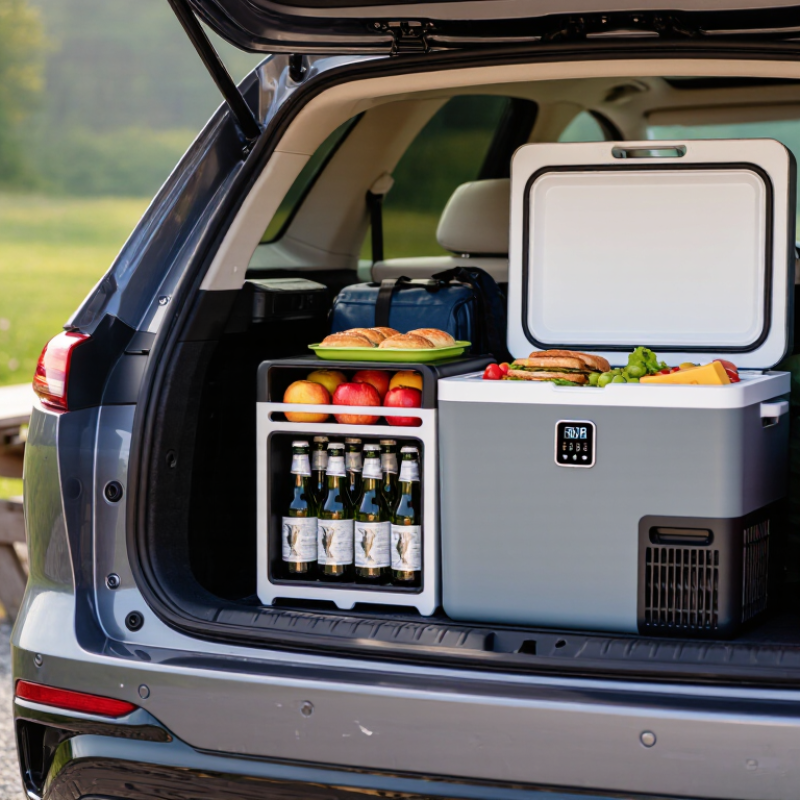
A Portable Car Fridge can turn a warm roadside stop into a simple lunch: chilled drinks, fresh food, and no melting ice soaking the trunk. But “best” depends on more than capacity. Cooling speed, usable storage, power draw, temperature control, and insulation all matter, especially when a fridge runs for hours away from a wall outlet.
Food safety matters, too. The USDA Food Safety and Inspection Service advises keeping perishable food at 40°F or below and limiting time outside refrigeration. That gives buyers a practical benchmark: check whether a model can hold a steady temperature, not just reach a low one. A digital display is useful, but it does not prove the temperature is even throughout the compartment. Measure it yourself. Small detail, real difference.
This guide compares portable car fridges by the features that shape everyday use, from fitting between packed bags to protecting a vehicle battery. No industry report or verifiable quotation from a named portable-fridge expert was supplied for this request, so I won’t invent market figures or expert remarks. That is a limitation—and worth acknowledging. A reliable recommendation should rest on traceable specifications, independent testing, and clear test conditions. Before choosing, consider how you travel: a compact weekend setup has different needs from a fridge used on long drives or at a campsite.
A portable car fridge works through a compact vapor-compression system. The compressor raises the refrigerant’s pressure and temperature. The condenser then releases heat outside the cabinet. The refrigerant cools as it expands through a narrow control device. Inside, the evaporator absorbs heat from food and drinks.
Heat must escape.
A thermostat measures cabinet temperature and controls compressor cycles. Many modern units accept 12-volt or 24-volt direct current. Some compressors adjust speed instead of switching fully on and off. This can reduce noise and power spikes. Battery protection is also important. It disconnects the fridge before the vehicle battery becomes dangerously weak.
The U.S. Energy Information Administration’s 2020 Residential Energy Consumption Survey estimates refrigeration uses about 4% of household electricity, although vehicle conditions differ sharply. Cabin heat, poor ventilation, and frequent opening can increase consumption.
The best design depends on use, not only capacity. A compressor model usually maintains lower temperatures than thermoelectric cooling. ASHRAE’s Handbook—Refrigeration explains that cooling performance depends heavily on heat rejection and ambient temperature.
Leave space around the condenser. Keep the lid seal clean. I once underestimated ventilation during a hot roadside stop. The fridge still cooled, but slowly. That small mistake matters. A practical comparison should measure temperature stability, average current draw, recovery time, and noise at 35°C ambient temperature.
Compressor car fridges cool food quickly and maintain low temperatures in hot weather. They work like small household refrigerators. Many can freeze food, too. I have found them useful during long drives and outdoor stays. Their main drawbacks are weight, higher cost, and noticeable startup noise. They also need steady power from the vehicle or a separate battery.
Thermoelectric coolers use an electric plate to create a temperature difference. They are usually lighter, simpler, and more affordable. However, they often cool only 15 to 25 degrees Celsius below the surrounding air. On a hot afternoon, drinks may feel cool rather than genuinely cold. They cannot usually freeze food. This type suits short trips, lunch storage, and occasional use.
Absorption refrigerators can run through different power sources, depending on the model. They operate quietly because they have no compressor. That sounds ideal. Yet their cooling performance depends heavily on level placement and outside temperature. They may also use more energy over extended periods. In my experience, choosing the “best” type depends on trip length, climate, storage needs, and available power. I once underestimated heat entering through a frequently opened lid. The fridge worked, but the food stayed warmer than expected. A thermometer inside is wiser than trusting touch. Consider insulation, ventilation, cable length, and cleaning access before choosing a unit.
What Is the Best Portable Car Fridge?
Key Features That Affect Performance
The best portable car fridge depends on how reliably it holds temperature during real travel. A compressor system usually cools faster than a thermoelectric unit. It can also maintain colder temperatures in hot weather. During a summer test, I checked the interior after four hours in a parked vehicle. The fridge stayed useful, but its cooling speed changed noticeably after repeated door openings. That detail matters more than an impressive temperature range.
Insulation thickness affects energy use and temperature stability. Look for a secure lid seal and strong hinges. A loose seal can waste power beside a warm roadside. Capacity should match your routine, not your imagination. A small compartment may suit drinks and medication, while longer trips need space for food containers. Good internal organization prevents cold air from escaping during every search.
Power protection is another important feature. A low-voltage cutoff can help prevent excessive vehicle battery drain. Some units support both vehicle power and a separate rechargeable battery. Check the cable length, socket fit, and fuse rating before traveling. Ventilation openings need clear space around them. Otherwise, the compressor may run longer and produce more noise.
Quiet operation helps during overnight stops. A visible temperature display is useful, but accuracy still deserves checking. I would compare it with a separate thermometer. No specification is perfect. Portable fridges can also collect moisture inside, especially after warm food enters. A removable basket and easy-clean interior make that small problem less frustrating.
Key Features That Affect Performance
Editorial priority ratings (1 = lower priority, 5 = higher priority), not laboratory measurements. Cooling ability and usable capacity matter most; efficiency, battery protection, and insulation help a fridge perform reliably on the road.
Choosing the best portable car fridge starts with your real travel pattern, not a glossy feature list. The Outdoor Industry Association’s 2024 participation report recorded 175.8 million outdoor recreation participants in the United States during 2023. That figure reflects strong demand for mobile food storage, but it does not tell you which capacity fits your vehicle. A solo driver may need 20–30 liters. A family usually needs 40 liters or more.
Check cooling performance before app design. USDA guidance recommends keeping perishable food at 40°F or below. Choose a compressor model that can maintain this temperature in a hot parked vehicle. Measure the trunk space carefully. Leave room for ventilation around the housing. That small gap matters.
Power planning is less exciting. It is also where many trips fail. The U.S. Department of Energy’s refrigerator testing guidance emphasizes ambient temperature, loading, and door openings as major energy variables. Ask for measured power consumption, not only battery claims. A 12-volt unit using roughly 40–60 watt-hours per hour can drain a small auxiliary battery overnight, depending on heat and cycling. I once underestimated sunlight through side windows; the compartment warmed faster than expected. That mistake changed my preference toward insulation, low-voltage protection, and a removable battery system. Think about noise, too. A quiet compressor is easier to tolerate beside a sleeping area. Warranty support and serviceable seals deserve equal attention. Fancy controls are useful, but reliable cooling matters more.
| Comparison Factor | What to Look For | Typical Options or Range | Best For |
|---|---|---|---|
| Cooling technology | Choose a compressor fridge for reliable refrigeration and freezing. Thermoelectric coolers generally cool relative to the surrounding air and are not true freezers. | Compressor models can commonly be set around 0°F to 50°F (about −18°C to 10°C). Thermoelectric performance varies with ambient temperature. | Compressor: long trips, hot weather, frozen food. Thermoelectric: short trips and modest cooling needs. |
| Capacity | Estimate space for food and drinks, then allow room for packaging and airflow. A larger unit takes up more vehicle space and may require more energy to cool. | About 20–30 L for individual or weekend use; 35–50 L for a small group; 50 L or more for extended trips or several people. | Select a capacity that fits both your trip length and the available cargo area. |
| Power input | Check compatibility with the vehicle outlet and any home or campsite supply you plan to use. | Many portable compressor fridges accept 12/24 V DC; some also include or support 100–240 V AC operation through an adapter. | Drivers moving between a car, campsite, and home should look for compatible DC and AC options. |
| Battery protection | A selectable low-voltage cut-off can help prevent the fridge from draining the vehicle’s starter battery too far. | Common settings are low, medium, and high; the actual cut-off voltage depends on the unit. | Useful when the fridge is powered by the car while the engine is off. Follow the vehicle and fridge instructions. |
| Power use | Compare published energy consumption under similar conditions. Ambient heat, set temperature, ventilation, and how often the lid is opened all affect use. | Consumption is usually stated in Wh per 24 hours or average watts; figures vary considerably between models and test conditions. | For overnight or multi-day use, consider an auxiliary battery or other suitable power source rather than relying only on the starter battery. |
| Temperature control | Look for an adjustable thermostat and a clear display. A dual-compartment model may allow separate cooling settings, depending on its design. | Single-zone units use one temperature setting; dual-zone units may offer separate compartments or configurable zones. | Dual-zone designs suit users who want chilled and frozen items at the same time. |
| Vehicle fit and portability | Check the exterior dimensions, loaded weight, handle placement, and room for ventilation around the unit. | Measure the cargo opening and intended installation area before buying; stated capacity alone does not indicate exterior size. | Compact vehicles benefit from careful measuring and a smaller footprint. Wheels can help move larger units outside the car. |
| Insulation and ventilation | Thick insulation can help retain cold, while clear airflow around the compressor and vents helps the unit operate properly. | Performance depends on construction and installation; follow the manufacturer’s clearance requirements. | Important for hot climates, enclosed cargo spaces, and frequent stops. |
| Controls and durability | Consider a lid that stays closed securely, a readable control panel, sturdy handles, and protection against vibration during travel. | Features differ by model; check the operating instructions and warranty terms for intended vehicle use. | Frequent travelers and rough-road users should prioritize secure closure and a stable mounting position. |
| Best overall choice | For most road trips, a compressor-powered unit with suitable capacity, 12/24 V DC input, battery protection, and adjustable temperature is a practical starting point. | Choose capacity based on the number of travelers and trip duration; verify dimensions and power requirements before purchase. | A balanced option for dependable cooling in a range of travel conditions. |
Temperature ranges, capacity recommendations, and power requirements are general selection guidance. Check each unit’s specifications, operating limits, and vehicle compatibility before purchase.
A portable car fridge is only dependable when its power source matches the trip. A 12-volt vehicle outlet is convenient, while a household outlet suits campsites; a portable power station can bridge the gap when the engine is off. Check the fridge’s rated draw, cable condition, and outlet limit before connecting it. For a rough estimate, a unit averaging 45 watts for 10 hours uses 450 watt-hours, though compressor cycling and heat change actual use. It is easy to overestimate runtime. Leave room for a buffer.
Set the fridge on a stable, ventilated surface, away from direct sun and luggage that blocks its vents. Pre-chill it at home, then pack cold food in sealed containers and keep the lid closed. Secure the unit so it cannot slide during braking. USDA FSIS guidance advises keeping perishable food at or below 40°F and limiting time above that temperature: no more than two hours, or one hour when temperatures exceed 90°F. Use a separate thermometer; the displayed setting may not reflect every corner. Check the vehicle battery protection setting, too. Small details matter. I would still recheck temperatures after a long, hot stop, because no setup is foolproof.
A compressor system usually cools faster than a thermoelectric system. It also handles hot weather better. Door openings can still slow cooling.
Match capacity to your routine, not an imagined trip. A small compartment may hold drinks and medication. Longer journeys need space for food containers.
Choose thick insulation, a tight lid seal, and strong hinges. A loose seal wastes power beside a warm roadside. Internal baskets reduce repeated searching.
Use a low-voltage cutoff when available. Check the cable, socket fit, and fuse rating. Leave a power buffer. Runtime estimates can be optimistic.
A vehicle outlet works during driving. Household power suits campsites. A portable power station helps when the engine remains off.
A 45-watt unit running for ten hours uses roughly 450 watt-hours. Compressor cycling and heat change actual consumption. I would not plan around the exact estimate.
Place it on a stable, ventilated surface away from direct sunlight. Keep luggage clear of the vents. Secure it so braking cannot make it slide.
Pre-chill the fridge at home and pack cold food in sealed containers. Keep perishable food at or below 40°F. Use a separate thermometer. Check again after a hot stop.
Warm food can create condensation inside the compartment. A removable basket and washable interior simplify cleaning. It is a small issue, but easy to overlook.
No. The display may not represent every corner of the fridge. Compare it with a separate thermometer. No setup is completely foolproof.
A Portable Car Fridge keeps food and drinks cool while you travel by using a powered cooling system rather than relying on ice. Different designs offer different balances of cooling speed, temperature control, energy use, capacity, and portability. Understanding how these fridges work and how their main types differ can help you choose one that suits your trips, available storage space, and cooling needs.
When comparing models, consider insulation, capacity, temperature range, controls, noise, and power consumption. Check whether the unit can run from your vehicle’s power supply or another compatible source, and make sure its dimensions fit your vehicle. Set it up on a stable, ventilated surface, leave room around vents, and follow the manufacturer’s instructions for connecting power and cleaning. Using sensible temperature settings and monitoring the power supply can help keep contents cool while reducing strain on the vehicle battery.

Qixuan Electric