Choosing the best 12v Rv Fridge is not simply a matter of comparing cabinet size or advertised capacity. It is an energy decision made inside a moving, heat-exposed environment. RV Industry Association shipment reports show continued demand for recreational vehicles, while market research from Grand View Research identifies growing interest in compact, portable refrigeration. More travelers now expect quiet cooling, efficient battery use, and dependable food storage beyond campground hookups.
The details matter. A 45-liter fridge may suit a couple for a weekend, but a family needs different priorities. Check daily amp-hour consumption, insulation thickness, compressor quality, ventilation clearance, and low-voltage protection. A fridge drawing 3 amps intermittently behaves differently from one drawing 3 amps continuously. That difference can empty a small battery before breakfast.
Craig Kirby, President and CEO of the RV Industry Association, has described RV travel as “a way of life.” That lifestyle depends on equipment that works away from shore power. Still, no single 12v Rv Fridge fits every owner. Solar capacity, battery chemistry, climate, driving habits, and meal planning change the decision.
Some specifications look impressive.
They can mislead.
A careful buyer should test realistic power demand, not trust only laboratory claims. Condensation, warm groceries, dusty vents, and a sloping campsite expose weaknesses quickly. This guide compares practical performance, installation requirements, storage design, and long-term reliability. It also questions assumptions that are easy to repeat but harder to prove on the road.
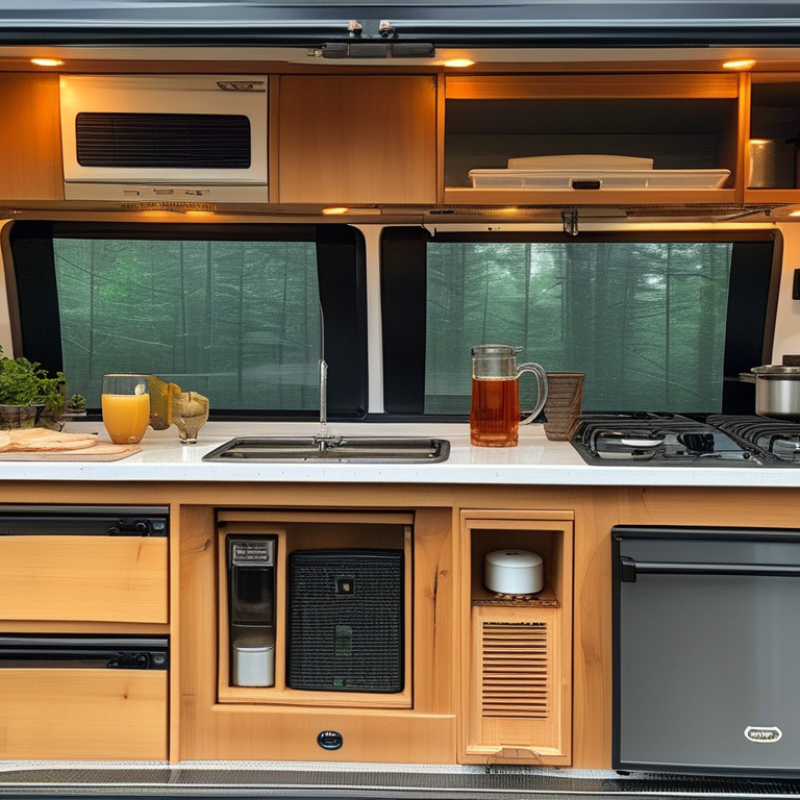
Define RV Capacity Needs: 40–100 L for Food, Drinks, and Freezer Space
Choosing a 12V RV fridge starts with capacity, not appearance.
The RV Industry Association reported 313,174 wholesale RV shipments in 2023. That volume reflects many travel styles, from weekend trips to extended living.
A couple on short journeys may manage with 40–55 liters.
Two adults traveling for a week usually need about 60–80 liters.
Families often need 80–100 liters, especially when carrying fresh food, drinks, and frozen items.
Measure usable space carefully.
A stated 60-liter capacity may include shelves, baskets, and unusable corners. Allow room for cold-air circulation. Do not pack every gap tightly.
The U.S. Department of Agriculture recommends keeping refrigeration at 40°F (4°C) or below, while freezers should remain at 0°F (-18°C).
A separate freezer compartment can protect frozen meals, but it reduces fresh-food space. That trade-off is easy to underestimate.
Think about daily habits.
Four cans, a milk container, vegetables, and a small freezer tray fill space quickly. Bottles also consume more volume than expected.
For two people, I would choose around 65–75 liters for mixed storage, with at least 8–15 liters reserved for freezing.
This is not a universal rule. A pescatarian couple, a family with children, and a solo camper will load very differently.
Pack a sample grocery basket before buying. It may expose an uncomfortable mistake.
Compare Compressor Cooling: 0–4°C Refrigeration and −18°C Freezing
Choosing a 12V RV fridge starts with its compressor cooling performance. A reliable unit should hold food between 0°C and 4°C during normal use. This range slows bacterial growth without freezing fresh vegetables or dairy products.
A freezer needs a different standard. Look for a compartment capable of reaching −18°C, not merely producing frost.
That temperature keeps frozen food solid and supports longer storage. In practice, performance depends on insulation, ambient heat, door openings, and ventilation around the compressor. A fridge may reach −18°C overnight, then struggle under direct summer sunlight. Check the temperature with an independent thermometer. The display can be optimistic.
Power use also matters. Compressor fridges usually cool more efficiently than absorption models in changing weather, but they still cycle frequently in hot conditions. A well-insulated 12V model may draw modest power over a full day, though the exact amount depends on capacity and thermostat settings.
My first assumption was that a larger freezer always offered better value. It did not. It consumed more energy and reduced fresh-food space.
Measure your battery capacity and daily charging supply before choosing. Leave clear airflow around the vents, and keep the fridge level enough for stable door sealing. Test it for several days before a long trip. Small gaps, warm drinks, and repeated opening can alter results more than expected. Temperature performance deserves careful checking.
Match Battery and Solar Capacity: Pair 100 Ah Batteries with 100–200 W Solar
How to Choose the Best 12V RV Fridge?
A 12V RV fridge should match your battery and solar system. A practical starting point is one 100 Ah battery with 100–200 W of solar. A typical compressor fridge may consume 300–500 Wh daily, depending on temperature, ventilation, and door openings. At 12.8 volts, a 100 Ah battery stores about 1,280 Wh nominally. Only part of that energy is comfortably usable. Lead-acid batteries often provide about 50% usable capacity, while lithium batteries can provide roughly 80–90%. Therefore, one battery may cover one to two days. Actual results can be less predictable.
Solar output needs realistic planning. The U.S. National Renewable Energy Laboratory’s PVWatts documentation applies a 14% default system-loss estimate. A 100 W panel receiving four peak-sun hours may deliver approximately 344 Wh daily after that loss. A 200 W array could provide about 688 Wh. These figures vary with shade, panel angle, weather, and wiring. The U.S. Department of Energy also identifies location and orientation as major solar-performance factors. That estimate is imperfect. Cloudy campsites can change the calculation quickly.
Tips: Measure the fridge’s real consumption with a DC watt meter for three days. Keep ventilation clear, pre-cool food before departure, and avoid opening the door repeatedly. If camping in shade, choose 200 W rather than 100 W. Leave reserve capacity for lights, fans, and charging devices. A battery monitor is useful, but it still cannot predict tomorrow’s weather.
How to Choose the Best 12V RV Fridge?
Match Battery and Solar Capacity for Reliable Off-Grid Cooling
| Fridge Type |
Typical Capacity |
Average Daily Energy Use |
Estimated Daily Battery Use at 12V |
Recommended Battery Capacity |
Recommended Solar Capacity |
Approximate Off-Grid Reserve |
Best Use Case |
| Compact chest-style compressor fridge |
30–40 L |
240–360 Wh/day |
20–30 Ah/day |
100 Ah LiFePO4 |
100–150 W |
About 2–3 days with limited sunlight |
Small RVs, campervans, and weekend trips |
| Single-compartment upright compressor fridge |
45–60 L |
360–540 Wh/day |
30–45 Ah/day |
100 Ah LiFePO4 |
150–200 W |
About 1.5–2 days with limited sunlight |
Couples seeking a balanced storage-to-power setup |
| Two-compartment compressor fridge-freezer |
65–90 L |
540–780 Wh/day |
45–65 Ah/day |
150–200 Ah LiFePO4 |
200–300 W |
About 1–1.5 days with limited sunlight |
Longer trips requiring frozen food storage |
| Large upright compressor fridge-freezer |
90–130 L |
720–1,080 Wh/day |
60–90 Ah/day |
200 Ah LiFePO4 or more |
300–400 W |
Less than 1 day without meaningful solar input |
Family-sized RVs with frequent off-grid camping |
| High-efficiency compressor fridge in mild weather |
40–60 L |
240–420 Wh/day |
20–35 Ah/day |
100 Ah LiFePO4 |
100–150 W |
About 2–3 days with moderate energy use |
Cool climates, shaded campsites, and efficient loading |
| Compressor fridge in hot weather |
40–60 L |
480–720 Wh/day |
40–60 Ah/day |
100 Ah minimum; 200 Ah preferred |
200–300 W |
About 1–1.5 days with limited sunlight |
Summer travel, warm climates, and frequent door opening |
Planning basis: Estimates assume a 12V compressor refrigerator, approximately 8–12 hours of compressor runtime per day depending on ambient temperature and insulation, and typical solar production of 4–5 peak-sun-hours per day. A 100 Ah LiFePO4 battery provides approximately 80 Ah of recommended usable capacity, while a 100 Ah lead-acid battery generally provides about 50 Ah of recommended usable capacity. Actual results vary with weather, ventilation, thermostat settings, food load, battery condition, and other RV appliances.
Check Installation Standards: Verify Fit, 10.5–16 V Input, and Under-45 dB Noise
Choosing the best 12V RV fridge starts with the installation space, not the product picture. Measure the cabinet opening, depth, door swing, and rear clearance. Allow room for wiring and airflow. Even careful measurements can be off by a few millimeters.
Check the electrical specification carefully. The fridge should accept a stable 10.5–16 V input. Measure voltage at the fridge terminals, not only at the battery. Long cables, loose connections, and undersized wiring can create voltage drop. That may cause poor cooling or unexpected shutdowns. Use the recommended fuse and cable size from the installation manual. Secure every connection against vibration. Small details matter.
Noise also deserves a real-world check. Look for a rated sound level under 45 dB, then ask how that figure was measured. A quiet room can make compressor sounds seem louder at night. Keep the unit level, leave the required ventilation gap, and prevent the cabinet from touching the fridge frame. Cabinet panels can amplify vibration. I would test the fridge for several hours before a long trip. This exposes heat buildup, weak connections, or annoying cycling sounds. Specifications guide the choice, but the actual installation decides whether the fridge feels reliable.
How to Choose the Best 12V RV Fridge?
Installation limits to verify before purchase: cabinet fit, 10.5–16 V input, and noise below 45 dB.
The refrigerator should fit the available cabinet opening according to its installation manual, operate within a 10.5–16 V DC supply range, and remain under 45 dB for quieter RV use. The chart shows the numeric electrical and acoustic limits; cabinet fit must be confirmed by comparing the appliance dimensions and required ventilation clearance with the RV opening.
Conclusion
Choosing the right 12v Rv Fridge starts with understanding your travel and storage needs. For most RV users, a capacity of 40–100 liters provides a practical balance for fresh food, drinks, and freezer space without taking up too much room. Compressor cooling is an important feature because it can maintain refrigeration temperatures around 0–4°C and freezing temperatures near −18°C, helping protect different types of food during extended trips.
Power planning is equally important. A typical 12V RV fridge may consume about 20–60 Ah per day, depending on temperature settings, ambient conditions, insulation, and usage frequency. To support reliable operation, consider pairing it with a 100 Ah battery and approximately 100–200 W of solar capacity, while allowing extra reserve for other appliances. Before installation, measure the available space carefully, confirm that the input voltage range is approximately 10.5–16 V, and check that operating noise remains below 45 dB for a more comfortable interior environment.
 Qixuan Electric
