Choosing a Portable Car Freezer involves more than comparing capacity and price. For road trips, camping, and delivery work, dependable cooling can make daily travel easier. A unit should fit the vehicle, hold a stable temperature, and use power efficiently. Small details matter: a secure lid, readable controls, and a cable that reaches the outlet.
This guide to China’s top 10 manufacturers introduces brands and suppliers serving this market. It considers product range, stated specifications, manufacturing experience, customization options, and customer support. These factors can help buyers build a shortlist, but they do not replace checking a model yourself. Real-world performance matters. A freezer that looks capable in a catalogue may behave differently in a hot vehicle or on uneven roads. That deserves attention.
Compare usable capacity, temperature range, power input, insulation, and protection against battery drain. Ask manufacturers for current product data, warranty terms, and test information where available. If you are sourcing in bulk, clarify lead times, sample availability, and after-sales arrangements before committing. Product specifications and business capabilities can change, so verify details directly with each company. No ranking can fit every buyer perfectly. Use this overview as a starting point, then match each supplier’s evidence to your needs.
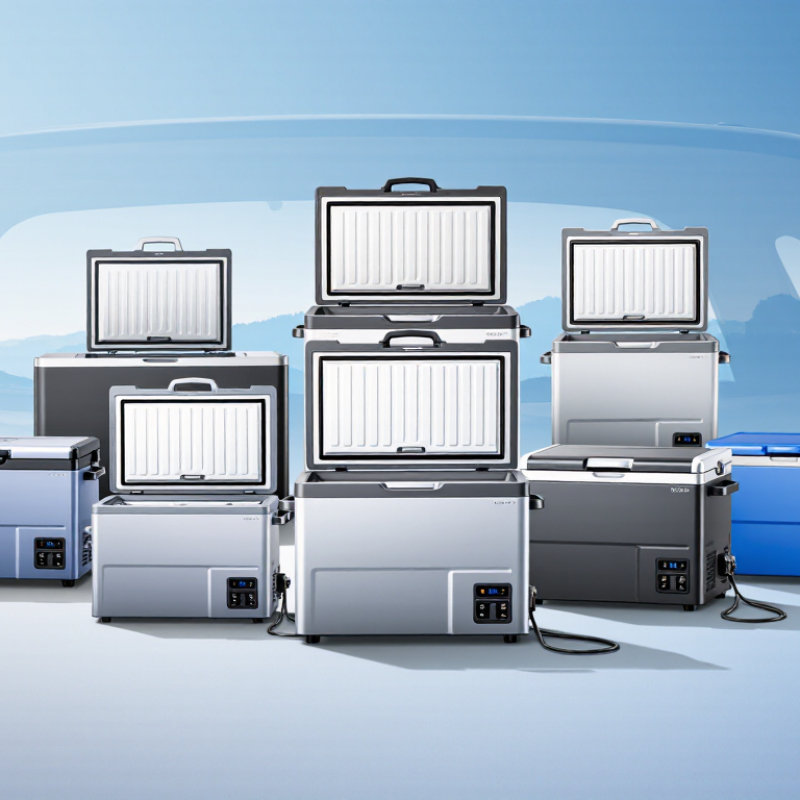
A portable car freezer usually runs from a vehicle’s 12 V or 24 V DC outlet. The voltage must match the unit’s specifications, and a secure connection helps prevent interruptions on rough roads. Before loading food, check the cable, outlet, and battery-protection settings. Small details count.
Cooling to −20°C can support deep-freezing, but the displayed setting is not a guarantee under every condition. Hot cabins, frequent lid opening, warm groceries, and poor ventilation can slow pull-down. Leave space around the compressor vents, pre-chill the freezer at home when practical, and use a thermometer to verify the temperature inside. That matters.
Power use changes with ambient heat, insulation, load, and how often the lid opens. A long parked stop may drain a starter battery, so choose a suitable low-voltage cutoff or a separate power source. Check the fit. A freezer that holds temperature in a shaded test may struggle in direct sun; that gap deserves attention when comparing specifications. DC operation is convenient, not effortless, and cable condition or voltage drop can affect performance.
China’s top ten portable car freezer manufacturers should be compared through tested capacity, energy use, and compliance—not headline specifications alone. Useful checks include usable internal volume, temperature stability, and daily power consumption at stated ambient temperatures. A freezer that holds food at 25°C may struggle inside a sun-heated vehicle. Ask for test conditions and independent verification.
Efficiency deserves close attention. UNEP’s 2023 Global Cooling Watch estimates that cooling demand could more than triple by 2050 without stronger action, while efficiency measures and other interventions could cut projected cooling emissions by 60%. The report covers cooling broadly, not car freezers specifically, but it underlines why measured energy performance matters. For a fair ranking, compare watt-hours per day under identical tests, then check safety and quality documentation for the intended market. One limitation remains: published figures are not always measured under matching conditions.
Tips: Request a test sheet showing ambient temperature, set point, usable volume, and energy consumption. Small detail. Often decisive. A brief real-world trial can also reveal lid leakage, compressor noise, and how quickly the unit recovers after opening.
Market reference: common nominal capacity points for portable car freezers. This chart does not rank manufacturers.
Portable car freezers are sold in a range of nominal capacities, from compact models to larger units. Capacity alone does not indicate cooling efficiency or regulatory compliance; compare each product’s published specifications and applicable certifications.
Portable car freezer manufacturers differ most in compressor design, insulation, and quality control. A useful profile explains cooling range, rated power, and performance in hot cabins, not just advertised capacity. Ask whether the compressor cycles steadily when the vehicle is parked, and how low-voltage protection is configured.
Small details matter. A loose lid seal can waste energy during a long drive.
Models from 20 to 50 liters serve different needs. A 20-liter unit may fit behind a front seat and hold drinks or a few meal containers. Around 35 liters offers more room for groceries, while a 50-liter model needs careful checks for trunk space and ventilation clearance. Measure before ordering.
Manufacturers offering OEM/ODM services should confirm cabinet dimensions, control-panel language, packaging, and sample approval in writing. Request test records for temperature stability, vibration, and power consumption.
These checks make supplier comparisons more reliable, though results can vary with ambient heat and vehicle airflow. Specifications look tidy on paper; real trips are less predictable. A supplier’s response to that gap is worth evaluating.
When comparing China’s top portable car freezer manufacturers, battery cutoff behavior deserves a real-world check, not just a specification sheet. A freezer set to 12 volts may draw power while a vehicle sits parked. Ask how low-voltage protection is calibrated, and whether users can adjust it for different battery types. Test it with a partly discharged battery, too. That detail matters.
EMC testing should cover more than a quiet lab setup. Compressor startup, fan operation, and switching between cooling modes can create different electrical noise. Request test reports for the finished unit and its power cables, then check that the tested configuration matches the product being supplied. A passing sample is useful, but it does not guarantee every production run behaves identically. This part can be messy.
RoHS compliance concerns restricted substances in materials and components; it does not prove cooling quality or durability. Buyers should request current declarations and supporting records, especially for control boards, wiring, and connectors. Traceability helps when components change. A careful supplier can explain how it reviews those changes, though paperwork alone is never the whole story. Compare evidence, not claims.
A practical, brand-neutral checklist for comparing portable car freezer products and suppliers. The entries below describe verification benchmarks and applicable requirements—not test results or certifications attributed to specific manufacturers.
| No. | Benchmark Area | What to Verify | Relevant Reference or Evidence | Buyer Check |
|---|---|---|---|---|
| 1 | 12 V battery protection | Confirm the low-voltage protection setting is stated for the actual input system, and check whether the cutoff level is adjustable. Thresholds vary by product and battery type. | Product manual or specification showing cutoff and restart voltages for 12 V operation. | Compare the documented settings with the vehicle or auxiliary battery maker’s permitted voltage range; do not assume one cutoff value suits every battery. |
| 2 | 24 V battery protection | Check that 24 V input has its own clearly documented protection settings rather than relying on figures intended for 12 V operation. | Manual or test record identifying the 24 V cutoff and restart behavior. | Confirm the freezer supports the intended vehicle supply and that its protection settings are appropriate for the battery system. |
| 3 | Cutoff behavior under load | Verify operation during compressor start-up and other expected load changes; supply voltage can dip temporarily under load. | Test procedure and results recording input voltage, operating condition, and shutdown or restart behavior. | Ask how the test accounts for cable length, connector resistance, and voltage drop at the appliance input. |
| 4 | Battery chemistry and BMS coordination | Check that the product’s low-voltage protection is not presented as a substitute for the battery’s own protection system. | Installation instructions identifying supported supply types and any battery-management-system considerations. | For lithium batteries, confirm that the battery BMS and freezer cutoff settings are compatible; battery-specific limits should come from the battery documentation. |
| 5 | Automotive EMC emissions | Review emissions testing appropriate to the product’s intended vehicle installation and electrical configuration. | Where applicable, test reports may reference CISPR 25 for vehicle-component radio-disturbance measurements. | Check the tested model, wiring, operating mode, report date, and laboratory details; a standard reference alone does not prove a product passed. |
| 6 | EMC immunity | Check whether the product was evaluated for immunity to relevant conducted and radiated disturbances in its intended environment. | Test plans may reference ISO 11452 methods for vehicle-component immunity, where applicable. | Request the test scope, operating conditions, acceptance criteria, and results for the exact product configuration. |
| 7 | Vehicle electronic-equipment approval | Determine whether vehicle-specific type approval is required for the destination market and intended use. | UN Regulation No. 10 (UNECE R10) concerns electromagnetic compatibility of vehicles and relevant electrical or electronic sub-assemblies. | Where approval is claimed, verify the approval documentation and that its scope covers the supplied model; applicability depends on the market and product classification. |
| 8 | ESD and electrical transient testing | Check whether electrostatic discharge and other relevant electrical disturbances have been considered for controls, connectors, and the power input. | IEC 61000-4-2 provides an ESD immunity test method; other IEC 61000-4 series methods may be relevant depending on the product and test plan. | Review the selected methods, test levels, operating state, and pass/fail criteria rather than relying on a generic “EMC tested” statement. |
| 9 | RoHS substance restrictions | For products within scope, assess compliance with restrictions on the applicable hazardous substances in electrical and electronic equipment. | EU RoHS Directive 2011/65/EU, as amended by Commission Delegated Directive (EU) 2015/863, restricts ten substances. Maximum concentration values are generally 0.1% by weight in homogeneous material, except cadmium at 0.01%, subject to applicable exemptions. | Request a model-specific declaration and supporting material evidence; check whether any claimed exemption is applicable and valid for the product. |
| 10 | Traceability and document consistency | Ensure battery-protection specifications, EMC reports, and RoHS documentation identify the same model or clearly explain covered variants. | Document set may include the product specification, user manual, test reports, declaration of conformity, and material-compliance records. | Match model numbers, revisions, power configurations, and report scope before comparing supplier claims. |
Values and requirements depend on product design, battery system, installation, and destination market. Confirm current regulations and the exact scope of any test report or declaration before purchase.
When comparing portable car freezer suppliers, look beyond the lowest temperature listed in a catalogue. Check the usable range, the adjustment increments, and whether performance changes in a hot vehicle. Ask for test conditions, too. A freezer running in a cool showroom may behave differently in a sunlit car with limited ventilation. I would not treat the widest advertised range as an automatic win.
Warranty terms deserve the same close reading. Confirm how long coverage lasts, which parts are included, and who handles claims after delivery. Compressor coverage may differ from coverage for the control panel, power cable, or lid seal. Small details matter. A clear process for replacement parts can be more useful than a generous-sounding warranty with vague exclusions.
Export experience can help suppliers manage packaging, shipping documents, and destination-specific requirements. Ask which markets they regularly serve and how they protect units against impact during transit. Support should also be tested before an order: send a practical question about voltage, error codes, or spare parts, then note the response time and clarity. Even a capable product can frustrate buyers when help is hard to reach. Supplier comparison is rarely tidy; some information may require follow-up, and that is worth recording rather than guessing.
Most models use a 12 V or 24 V DC outlet. Match the vehicle voltage to the unit’s specifications. Check the cable and outlet before loading food.
It may reach that setting, but hot cabins and warm groceries can slow cooling. Pre-chill the unit when practical. Use a thermometer to check the actual temperature. Settings are not guarantees.
Use a suitable low-voltage cutoff or a separate power source during long stops. Battery protection matters. Check its settings before a trip.
Ambient heat, insulation, food load, and lid openings all affect consumption. Direct sun can make cooling harder. Leave clear space around compressor vents.
Compare watt-hours per day under matching test conditions. Ask for the ambient temperature, set point, and usable volume. Different test setups can make figures difficult to compare.
A 20-liter model may fit behind a front seat. Around 35 liters offers more grocery space. A 50-liter unit needs careful trunk and ventilation measurements. Measure first.
Request records for temperature stability, vibration, and power use. Ask how the unit performs in hot conditions. Paper specifications look neat; actual trips can be less predictable.
Confirm cabinet dimensions, control-panel language, packaging, and sample approval in writing. Ask for test conditions, too. One detail can be missed, so review everything carefully.
This guide explores the Portable Car Freezer market in China, focusing on how manufacturers design compact cooling systems for vehicles and outdoor use. It explains common 12 V and 24 V DC power options, cooling performance that can reach approximately −20°C, and typical 20–50 L capacities. The manufacturers are assessed through practical considerations such as production capacity, energy efficiency, product range, and compliance documentation, rather than brand promotion.
The profiles outline compressor-system features and OEM/ODM capabilities, while industry benchmarks cover battery-protection cutoffs, electromagnetic compatibility testing, and RoHS compliance. A supplier comparison framework also considers temperature range, warranty terms, export experience, after-sales support, and access to replacement parts. Together, these points help readers evaluate product suitability and supplier reliability for different vehicle, travel, and commercial applications.
Qixuan Electric