Choosing the right car refrigerator can be a game-changer for your travel experiences. A good car refrigerator keeps your food and drinks cool, turning long journeys into enjoyable adventures. Whether you're camping or heading to a picnic, having fresh items adds convenience to your trip.
When selecting a car refrigerator, consider the size that meets your needs. Compact models are great for shorter trips, while larger options suit longer vacations. Energy efficiency is crucial as well, especially during extended journeys. A reliable battery life ensures that the refrigerator maintains a consistent temperature. Look for brands that specialize in outdoor gear; their experience can offer insights into quality.
Additionally, reflect on your specific requirements. Will you mostly store beverages or prepared meals? Think about what works best for you. Remember, not every model suits every user. Conducting thorough research can prevent missteps. A car refrigerator is an investment in your travel comfort. Take your time, weigh the options, and choose wisely.
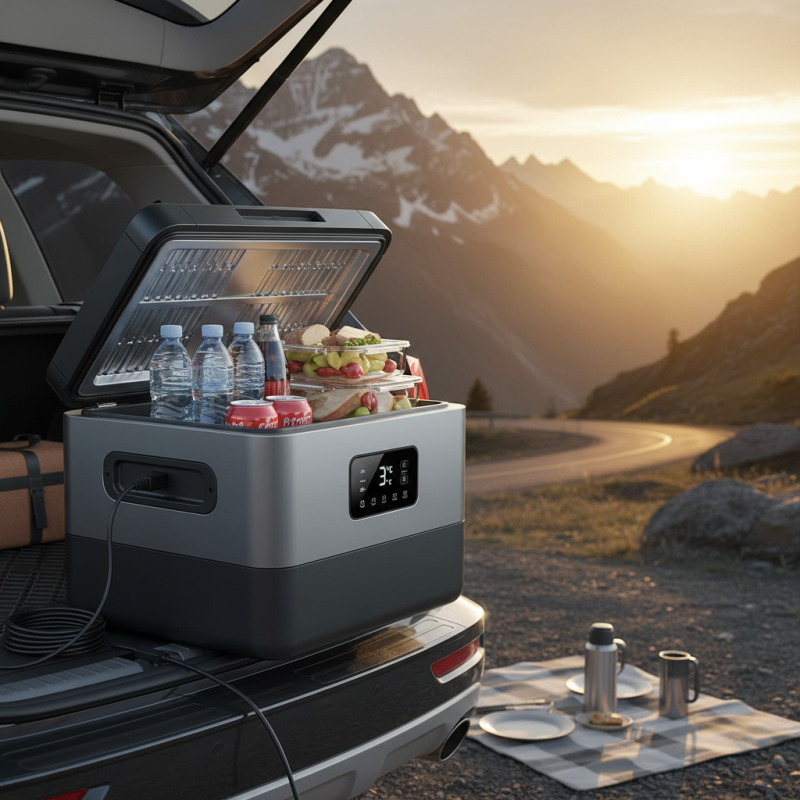
When looking for a car refrigerator, it's crucial to understand the different types available. There are primarily three: portable coolers, thermoelectric refrigerators, and compressor refrigerators.
Portable coolers are great for short trips. They use ice or ice packs to keep items cold. This option is budget-friendly and easy to transport, but their cooling efficiency can diminish over time.
Thermoelectric refrigerators are based on the Peltier effect. They are lightweight and operate quietly, making them ideal for car travel. However, they are less effective in extreme heat. According to a study from the American Society of Heating, Refrigerating and Air-Conditioning Engineers, thermoelectric models generally achieve 20-40°F below ambient temperature. This may not suffice in hot climates.
Compressor refrigerators offer the best cooling capabilities. They can maintain low temperatures even in sweltering conditions. This makes them a favorite for long road trips or camping. These models consume more power and are usually heavier, which might be something to consider for your vehicle's space.
Tip: Think about your travel habits. If you frequently take long trips, investing in a compressor model may be wise. If you mostly take day trips, a thermoelectric unit could suffice. Always check your vehicle's power outlet capabilities before deciding.
When selecting a car refrigerator, consider the size. A model that fits well in your vehicle is crucial. Compact units save space but may limit capacity. Conversely, larger fridges can hold more but may be cumbersome. Assess your needs. If you travel alone, a smaller unit may suffice. For family trips, a larger one is usually better.
Energy efficiency is another significant factor. Look for models with low power consumption. This feature helps extend battery life during road trips. A good car refrigerator should maintain an even temperature. This ensures food and beverages stay fresh. Additionally, check for a robust build. Durability is key for any outdoor adventure.
Finally, ease of use matters. User-friendly controls are essential. Some models come with LED displays for temperature monitoring. Additionally, portability features like sturdy handles make transportation easier. Consider noise level too. An excessively loud unit can be annoying during long drives. Reflect on these factors to make an informed choice. A thoughtful approach can greatly enhance your traveling experience.
When choosing a car refrigerator, size and capacity are crucial. Decide on the intended use first. Are you taking long trips or just short drives? A compact model may suffice for short journeys, while extended trips may require a larger capacity.
Consider the internal dimensions carefully. Look for models that fit your space and can hold your essentials. Remember that larger fridges can consume more power. Understand your vehicle’s power supply. Make sure it can support the refrigerator you select.
It can be tempting to opt for the biggest model available. Bigger isn't always better. Think about how often you’ll use it. If it’s only occasionally, a smaller size may be more practical. In reality, not every need requires a massive refrigerator, making the right choice both personal and practical.
When selecting a car refrigerator, energy efficiency and power supply are crucial factors. Many models consume varying amounts of energy, which impacts your vehicle’s battery. Look for units that specify low power consumption. Some refrigerators have a DC mode, optimizing their energy use while connected to your car's battery.
Consider the power supply options available. Many car refrigerators operate on battery power, but it's essential to assess your vehicle's capacity. If you plan long trips, a model that includes dual power supply—AC and DC—provides flexibility. You might need to use an inverter for AC use. Be cautious, as inverters can also drain your battery quickly.
Monitoring energy efficiency is vital but can be tricky. Some units may work efficiently during cool outdoor conditions but struggle when exposed to high heat. This inconsistency can lead to food spoilage, a major concern during long drives. Choose a model with good insulation to maintain internal temperatures longer, even in fluctuating environments.
When budgeting for a car refrigerator, it’s crucial to understand the price ranges. Basic models can start around $100, while high-end units may exceed $1,000. According to industry reports, a substantial portion of consumers, about 40%, prefer options priced between $200 and $400. This range often balances quality and functionality, making it a popular choice.
Value factors play a significant role in your decision. Look for energy efficiency ratings, storage capacity, and build quality. A refrigerator’s power consumption can impact your overall cost. In fact, reports indicate that energy-efficient models can save users up to 30% on electricity compared to standard options. However, cheaper doesn’t always mean better. Some budget models may lack essential features or durability, forcing buyers to reconsider their long-term investment.
Consider the purpose of your car refrigerator. Will it serve occasional trips or long journeys? Understanding your needs will help refine your options. Buyer feedback highlights that many less expensive units fail in extreme temperatures, which can be a significant drawback. Investing slightly more can provide reliability and peace of mind, especially during road trips where fresh food is a priority.
: Consider your trips. Short drives need compact models; long journeys require larger capacity.
Find models that fit your space and hold your essentials comfortably.
Yes, larger models typically use more energy. Keep your vehicle’s power supply in mind.
Absolutely. It affects your vehicle’s battery life and overall cost of usage.
Look for dual power supply—AC and DC. It adds flexibility for long trips.
Yes, be cautious. Inverters can consume significant power if not sized correctly.
Many units struggle in high heat, risking food spoilage. Invest in good insulation.
Basic models start around $100. Popular choices are between $200 and $400.
Yes, they can save you up to 30% on electricity. But beware of low-quality options.
Cheaper models may not withstand extreme temperatures, affecting reliability on trips.
When selecting a car refrigerator, it's essential to understand the various types available in the market. From Portable Coolers to compressor models, each offers unique features tailored to different needs. Key considerations include size and capacity, ensuring the refrigerator fits well in your vehicle while catering to your storage requirements.
Energy efficiency is another critical factor; opting for a model that minimizes power consumption can save you both energy and costs. Additionally, it's important to budget effectively, as prices can vary widely based on features and quality. Evaluating these aspects will help you find the best car refrigerator to meet your specific needs, allowing you to enjoy cool refreshments on the go.

Qixuan Electric