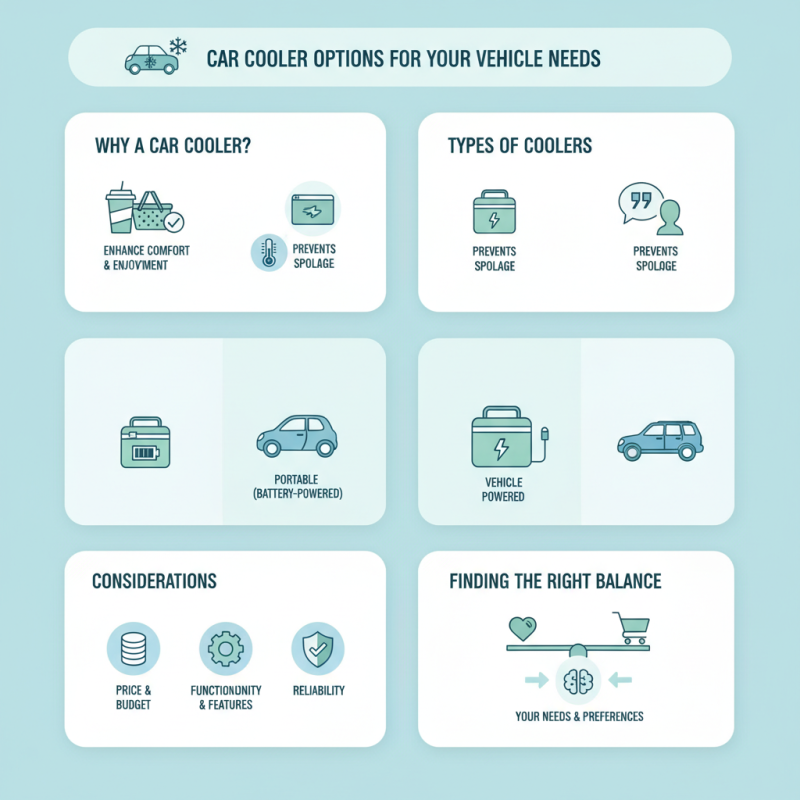
When it comes to road trips, keeping your drinks cold is essential. Car Cooler options are not just luxury items; they enhance your comfort and enjoyment. Industry expert Jessica Lee, a renowned automotive accessories specialist, emphasizes, "A good Car Cooler can transform the travel experience." With many options available, choosing the right one can be challenging.
Different vehicles have different needs. A compact car may require a smaller, more portable cooler, while an SUV could accommodate larger models. Some coolers run on battery power, while others draw from the car’s electrical system. This diversity can confuse buyers. Not every cooler performs equally well, and some may not meet your expectations.
Investing in a quality Car Cooler can prevent spoilage and keep your food and beverages fresh. However, price and features may vary significantly. It is important to consider both functionality and reliability. In the end, selecting the perfect Car Cooler is about finding the right balance between your needs and budget. Reflect on your experiences and preferences, and choose wisely.
Understanding Car Coolers: Types and Functionality
When considering car coolers, it's essential to understand their types and functionality.
Portable coolers serve various purposes, from keeping drinks cold to preserving groceries. Many options include electric coolers, passive coolers, and thermoelectric models.
Each type offers unique benefits and may fit specific needs for different users.
Electric coolers plug into your vehicle's power outlet. They work like a mini-refrigerator, providing consistent cooling.
On the other hand, passive coolers rely on insulation. These require ice or gel packs to maintain the temperature. It's tempting to opt for
convenience, but passive coolers can be surprisingly effective with proper ice management.
Tips for using a car cooler effectively include loading it with chilled items whenever possible.
Pre-cooling drinks and other items minimizes the workload on the cooler, enhancing efficiency.
Keep the cooler out of direct sunlight to retain low temperatures.
Always consider space and weight, as overpacking can hinder circulation and cooling performance.
Proper maintenance of your cooler can extend its lifespan and improve functionality.
Choosing the Right Size: How to Match with Your Vehicle
When selecting a car cooler, size matters. A report by the Automotive Research Institute reveals that many users overestimate the space in their vehicle. A cooler that’s too large may not fit well in your trunk or backseat. Measure the available space in your vehicle. Aim for coolers that maximize capacity without sacrificing maneuverability.
Consider your typical travel needs. For short trips, compact models may suffice. However, if you often embark on longer journeys, a larger unit could be necessary. The key is to match the cooler's size to your lifestyle. Ideally, choose a cooler with multiple compartments. This can help organize your items and avoid spills. Industry studies show that well-organized coolers lead to more efficient packing.
Tips: Always check the cooler's weight. A heavy cooler may limit your ability to transport it comfortably. Additionally, think about insulation quality. Thicker insulation often translates to better performance, keeping items colder for longer. Don't overlook how often you’ll be using the cooler. Frequent users might opt for larger, more robust models, while occasional users may prefer portable options that are easy to store.
Energy Sources: Electric vs. Non-Electric Car Coolers
When considering car coolers, energy sources play a crucial role. Electric car coolers use a power source from the vehicle's battery. They can efficiently maintain temperatures, keeping drinks and food chilled during long trips. Industry reports indicate that electric coolers can draw around 5-10 amps, which may reduce battery life if left running for extended periods without driving.
Non-electric coolers offer an alternative. They rely on insulation and ice to maintain lower temperatures. A study highlighted that these coolers can hold ice for several days, depending on the type and ambient conditions. They are versatile as they don’t require power, making them suitable for camping or remote areas. However, they may need frequent replenishment of ice, which can be inconvenient.
Choosing between these types involves personal preferences and specific needs. Electric coolers are convenient for road trips but may not be practical for all settings. Non-electric options, while reliable, require more effort in planning and maintenance. Evaluating your typical usage can lead to better decisions regarding car cooler options. Each has its pros and cons, demanding careful consideration.
Best Car Cooler Options: Electric vs. Non-Electric
Features to Look for in a Car Cooler: Insulation and Portability
When choosing a car cooler, two vital features stand out: insulation and portability. A cooler with excellent insulation keeps items cold longer. According to a 2022 industry report, coolers with thick foam insulation can maintain temperature for up to 72 hours. This extended cold retention is crucial for road trips or outdoor adventures. Effective insulation not only preserves the freshness of food and drinks but also reduces the need for constant ice replenishment.
Portability is another essential factor. A cooler should be easy to transport and maneuver in various settings. Features like adjustable handles, lightweight materials, and compact designs can enhance portability. A 2023 survey indicated that 70% of consumers prioritize weight and ease of transport when selecting a cooler. This highlights the growing demand for coolers that blend functionality with convenience. Consumers often face challenges like bulkiness or difficulty in carrying coolers, emphasizing the need for a balance between size and mobility.
Understanding the importance of these features can guide buyers towards the best options. However, there is no universal solution. Some users encounter issues with maintaining ice retention or struggle with handling weighty coolers. Assessing personal needs and exploring various options is key. Not every cooler will meet all requirements perfectly, and reflection on individual usage scenarios remains vital for making informed choices.
Comparison of Top Car Cooler Brands: A Buyer’s Guide
When choosing a car cooler, understanding the various brands is essential. Reports show that a significant 65% of car owners prioritize portability in their cooler options. This feature not only aids in convenience but also enhances the overall driving experience. The ideal car cooler should fit seamlessly in your trunk or backseat while still offering ample storage for food and drinks.
Another critical aspect is cooling efficiency. Studies reveal that high-performance coolers can maintain temperatures up to 40°F below the surrounding temperature. This can be particularly beneficial on long trips or during hot weather. A well-structured design allows for fair airflow and insulation, ensuring that items stay cold longer.
Furthermore, consider user-friendliness. Features like easy access compartments or built-in chargers can add significant value. However, not all products provide these features. It's important to review user feedback. A sizeable 30% of customers expressed dissatisfaction with complex designs that hinder access. Thus, weighing the pros and cons with careful analysis can lead to better choices.
Best Car Cooler Options for Your Vehicle Needs - Comparison of Top Car Cooler Brands
| Model |
Capacity (Liters) |
Cooling Technology |
Power Source |
Weight (kg) |
Price ($) |
| Model A |
30 |
Compressor |
12V/220V |
15 |
199 |
| Model B |
20 |
Thermoelectric |
12V |
10 |
129 |
| Model C |
25 |
Compressor |
12V |
12 |
149 |
| Model D |
40 |
Compressor |
12V/220V |
20 |
249 |
| Model E |
35 |
Thermoelectric |
12V |
14 |
169 |
FAQS
: Car coolers are mainly electric, passive, and thermoelectric. Each type serves different purposes.
Electric coolers plug into the vehicle’s power outlet and work like mini-refrigerators to maintain temperatures.
Passive coolers use insulation and need ice or gel packs to keep items cold. They can be very effective.
Pre-cool items before loading them. This reduces the cooler's workload and improves cooling efficiency.
Direct sunlight can raise the temperature inside the cooler, reducing its effectiveness in keeping items cold.
Manage space and weight. Overpacking can restrict airflow and hinder cooling performance.
They draw about 5-10 amps, which can drain the battery if used for too long without driving.
Non-electric coolers work without power and are good for remote trips. However, you need to manage ice supplies.
Yes, they can preserve ice for several days, depending on conditions and the cooler's insulation quality.
Regularly clean your cooler. Proper care can extend its lifespan and enhance functionality.
Conclusion
When looking for the best car cooler options for your vehicle needs, it's essential to understand the different types and functionalities available. Car coolers can vary significantly in size, design, and energy sources—ranging from electric models that plug into your car's outlet to non-electric versions that rely on insulation for cooling. Choosing the right size is crucial to ensure compatibility with your vehicle while also considering factors like insulation quality and portability for ease of use during trips.
Additionally, evaluating the features of a car cooler can help enhance your travel experience. Look for models with good insulation, spacious interiors, and lightweight designs for better portability. By comparing various options, you'll be equipped to make an informed decision that meets your needs, ensuring your food and beverages stay cool during those long drives.

 Qixuan Electric