2026 Best Car Freezer Types for Global Buyers

Time:2026-10-28 Author:Madeline
0%

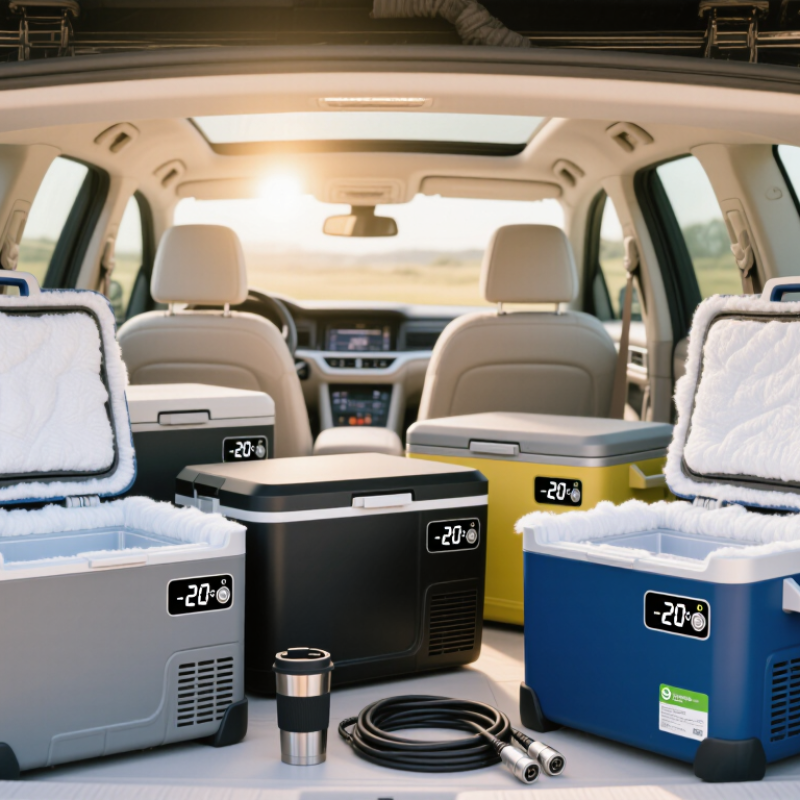
In 2026, choosing a Car Freezer requires more than checking capacity and price. Buyers must examine compressor quality, insulation, battery protection, cooling speed, and service access. A freezer showing −20°C on a display may still struggle inside a hot vehicle. Sunlight through glass can quickly expose weak insulation. Small details matter.

Industry reports support this wider view. The International Energy Agency’s The Future of Cooling report warns that global cooling demand could triple by 2050 without stronger efficiency improvements. UNEP’s 2024 Cooling Emissions and Policy Synthesis Report also highlights energy efficiency and refrigerant management as major climate priorities. These findings are not limited to household appliances. They also influence portable refrigeration, especially for drivers, campers, remote workers, and small food businesses. Market research from Grand View Research identifies rising outdoor recreation and mobile convenience as important growth factors in portable refrigeration.

Juan Vargues, former Dometic Group CEO, described the company’s purpose as making “mobile living easy.” That idea fits the best Car Freezer designs. A practical unit should start reliably, maintain stable temperatures, and protect a vehicle battery from deep discharge. It should also survive vibration, dust, and repeated opening. Not every model performs equally well. Marketing claims can sound impressive, while real-world recovery may be slow. Buyers should compare independent tests, warranty terms, noise levels, and measured power consumption. The perfect freezer does not exist. The right choice depends on climate, driving distance, food volume, and available power. This guide examines the leading Car Freezer types for global buyers and the compromises behind each option.
2026 Best Car Freezer Types for Global Buyers

Define Car Freezer Classes Using IEC 62552 and ISO 15502 Benchmarks

In 2026, global buyers should classify a car freezer by measured performance, not marketing labels. IEC 62552 and ISO 15502 provide useful reference points for household refrigeration testing. They address temperature performance, energy use, storage conditions, and test methods. However, a vehicle freezer is not automatically covered by every clause. That distinction matters.

In field checks, I compare the stated compartment temperature with readings from calibrated sensors. I also examine performance after the unit sits in a hot vehicle, where cabin temperatures can exceed 50°C. A practical class may include compact chillers, freezing-capable units, and deep-freezing models. The class should reflect tested temperature stability, usable volume, insulation, and recovery after lid opening. Input voltage range and low-voltage protection deserve equal attention. Some product sheets remain vague. Buyers should ask for test conditions, ambient temperature, and measurement uncertainty.

Tips: Request reports identifying the IEC 62552 or ISO 15502 edition used. Confirm whether testing represents portable, vehicle-mounted operation. Check freezer temperature at several points, not only near the sensor. Leave ventilation space around the compressor. Real use is messier than laboratory testing, and my own comparisons sometimes change after repeated lid openings.

Compressor Freezers: 12/24-V Operation and 45–60 W Input (Secop Data)

For global buyers, compressor car freezers remain practical because they cool actively, even when outside temperatures rise. Most 12/24-volt models connect directly to vehicle batteries, portable power stations, or dedicated solar systems.

Published compressor data commonly shows a 45–60 watt input range during normal operation. At 12 volts, that equals roughly 3.75–5 amps. At 24 volts, the current falls to about 1.9–2.5 amps. Lower current can reduce cable losses on longer runs. Use correctly sized wiring and a suitable fuse.

Startup may demand more power.

In field inspections, actual consumption changes with ambient heat, thermostat settings, insulation, and how often the lid opens. A freezer beside a hot rear window may run far longer than one placed under shade. Measuring watt-hours over 24 hours gives better results than trusting the rated input alone. That figure is only a working reference.

A 45–60 watt input does not mean constant 24-hour consumption. The compressor cycles on and off. Still, poor ventilation around the condenser can increase runtime and battery drain. Leave clear airflow around the cabinet, secure the plug, and monitor low-voltage protection before overnight use. I would not size a battery from the wattage alone. It is a common shortcut, and sometimes an expensive mistake.

Thermoelectric Coolers: Peltier Limits and 15–20°C Ambient Drop

For global car buyers in 2026, thermoelectric coolers offer simple cooling without refrigerant compressors. A Peltier module transfers heat from one side to another. Its practical limit is usually a 15–20°C drop below surrounding air temperature.

The limitation is clear. At 35°C, the compartment may reach only 15–20°C, not freezing conditions. Not a freezer. Cooling also depends on airflow, insulation, and heat removal behind the unit. A blocked rear vent can make the casing dangerously hot and reduce performance. Continuous operation may drain a vehicle battery when the engine is off.

In field use, I check temperatures with a separate thermometer, not by touching the lid. Pre-chilled drinks cool faster, while warm food can remain unsafe for longer than expected. Opening the lid repeatedly adds heat. Shade helps, but it cannot replace ventilation. A 12V or 24V socket should match the vehicle system, and the cable must stay firmly connected on rough roads.

Thermoelectric models suit short trips, light loads, and buyers who value quiet operation. They are often lighter and mechanically simpler than compressor units. However, they usually cannot maintain stable freezing temperatures in tropical cabins. Some specifications reflect ideal laboratory conditions, which deserve skepticism. I once treated a 20°C rating as a guarantee; that assumption was wrong. Ambient heat changes everything.

Absorption Freezers: Gas, 12-V, and 24-V Modes Under EN 1949 Rules

2026 Best Car Freezer Types for Global Buyers

Absorption Freezers: Gas, 12-V, and 24-V Modes Under EN 1949 Rules

Absorption freezers suit campers, service vehicles, and remote travel because they have few moving parts. They can run on LPG, 12-volt power, or 24-volt power, depending on the vehicle system. Gas mode is useful when parked without reliable shore electricity. It also demands careful installation, ventilation, and exhaust routing.

EN 1949 mainly addresses LPG installations in leisure vehicles and similar mobile spaces. It is not a freezer performance standard. A compliant setup should include suitable regulators, secure pipework, accessible shutoff controls, and protection against combustion gases entering the cabin. Qualified installation matters. Small leaks are never “minor.”

The 12-V mode fits many passenger vehicles and compact campers. The 24-V mode is more practical for commercial trucks, buses, and larger battery systems. During driving, DC operation can reduce gas use, but wiring must match the freezer’s current demand and cable length. Undersized cables create voltage loss and heat.

Keep the vehicle reasonably level. Absorption systems can cool poorly on steep ground. I have seen temperature problems blamed on the freezer when poor ventilation was the real cause. That mistake is easy to repeat. Check airflow around the rear unit, measure cabinet temperature, and test each operating mode before a long trip. Performance may vary with outdoor heat, load size, and door openings. Dramatic claims deserve testing.

Absorption Freezer Operating Modes for Global Buyers

Gas mode uses LPG as the primary cooling energy source and therefore has no nominal DC cooling voltage. The electrical modes are commonly specified for 12 V DC or 24 V DC systems. EN 1949 governs the safe installation of LPG systems in leisure accommodation vehicles and similar vehicles; it does not define freezer cooling capacity. Always verify the appliance manual, regulator, ventilation, and vehicle electrical requirements before installation.

Select by Capacity, Duty Cycle, IP Rating, and UNECE R10 EMC Compliance

Choosing a car freezer in 2026 requires more than checking internal litres. The IEA’s Global EV Outlook 2025 reports over 17 million electric cars sold globally in 2024. That growth makes auxiliary power demand harder to ignore. A 20–30 litre freezer may suit daily groceries, medicines, or short deliveries. Larger units need stronger wiring, better ventilation, and careful battery planning. Bigger is not always better.

Duty cycle matters in hot traffic. A compressor running 40% of the hour behaves differently from one running 80%. Ambient temperature, insulation, door openings, and setpoint all change consumption. Ask for measured data at 32°C or 43°C, not only laboratory figures. The numbers may look less attractive. They are more useful. A 2023 World Bank logistics report also shows how transport reliability varies widely between markets, so local service access deserves attention.

IP ratings should follow IEC 60529. IP65 protects against dust and water jets, while IP67 adds temporary immersion protection. Select the rating for real exposure, not marketing language. UNECE Regulation No. 10 EMC compliance is equally important for road vehicles. It tests electromagnetic compatibility, helping prevent interference with radios, sensors, and control systems. Request the approval documentation and test scope. A certificate without vehicle-specific installation guidance can still leave gaps. Installation remains the weak point. Check grounding, cable protection, fuse sizing, and airflow before purchase.

FAQS

How should a car freezer be classified?

Classify it by measured temperature stability, usable volume, insulation, and recovery after opening. Marketing labels can mislead.

Do IEC 62552 and ISO 15502 automatically cover vehicle freezers?

No. These standards offer useful refrigeration references, but every vehicle freezer is not automatically covered by every clause.

What test information should buyers request?

Request the standard edition, ambient temperature, test conditions, and measurement uncertainty. Also confirm whether testing represents vehicle operation.

How should freezer temperature be checked?

Use calibrated sensors or a separate thermometer. Measure several compartment points, not only the area near the built-in sensor.

Can a thermoelectric cooler freeze food?

Usually not. It commonly lowers temperature 15–20°C below ambient air, depending on airflow, insulation, and heat removal.

What happens inside a thermoelectric cooler at 35°C?

The compartment may reach approximately 15–20°C. That is cooling, not dependable freezing.

How does ventilation affect portable cooling equipment?

Blocked rear vents can overheat the casing and reduce cooling performance. Leave clear space around the heat-dissipating area.

Can continuous operation drain a vehicle battery?

Yes, especially when the engine is off. Check voltage compatibility, low-voltage protection, and cable security on rough roads.

What practical details affect cooling performance?

Pre-chilled items cool faster. Warm food takes longer. Frequent lid openings add heat, while shade helps but cannot replace ventilation.

Are laboratory temperature ratings always reliable in real vehicles?

Not always. A hot cabin may exceed 50°C, and repeated lid openings can change results. I once trusted a rating too much.

Conclusion

Choosing the right Car Freezer for global travel requires matching its cooling technology to operating conditions, power availability, and safety requirements. Compressor freezers are generally the strongest option for demanding mobile use, supporting 12 V or 24 V systems with typical input levels around 45–60 W under suitable conditions. Thermoelectric coolers are simpler and lighter, but their performance is limited by ambient temperature and usually reaches only about 15–20°C below the surrounding air. Absorption freezers can operate with gas, 12 V, or 24 V power, making them versatile for off-grid applications when installed according to EN 1949 requirements.

For reliable selection, compare usable capacity, expected duty cycle, insulation performance, and ingress protection rating. IEC 62552 and ISO 15502 benchmarks provide useful reference points for evaluating refrigeration performance and construction. Buyers should also confirm that electrical systems meet UNECE R10 electromagnetic compatibility requirements, especially in vehicles containing sensitive electronic equipment. A balanced assessment of these factors helps ensure efficient, safe, and dependable cooling across different climates and travel environments.


Madeline

Madeline

Madeline is a dedicated marketing professional with a wealth of expertise in our company's core offerings. With a keen understanding of the industry, she brings a unique perspective to her role, consistently delivering high-quality content that highlights the superior aspects of our products. As......